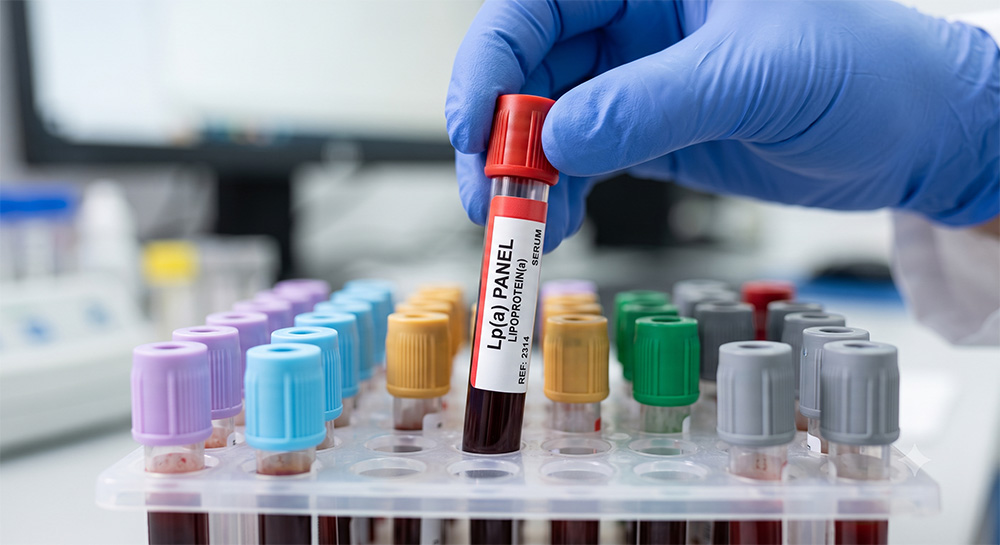
When we talk about cholesterol and heart health, most people have heard of “good” HDL cholesterol and “bad” LDL cholesterol. Lp(a) is far less well known, even though large population studies suggest around one in five people have a raised level.
That matters in Scotland, where the British Heart Foundation estimates 700,000 people are living with heart and circulatory disease, and these conditions still account for 29% of all deaths.
For some people, a high Lp(a) level can increase the chance of heart and blood vessel problems, even if they feel well and have a healthy lifestyle. One important difference is that Lp(a) is mostly decided by the genes we inherit from our parents.
What is lipoprotein(a)?
Lp(a) is made by the liver and carries cholesterol and other fats around the body in the blood. It is similar to LDL cholesterol, often called “bad cholesterol”, but it has an extra protein attached to it.
High Lp(a) matters because it can make fatty material more likely to build up inside the arteries, which are the blood vessels that carry blood around the body.
Over time, this can increase the risk of heart and blood vessel disease, including heart attacks, strokes and poor circulation in the legs. High Lp(a) has also been linked with narrowing of one of the heart valves, called the aortic valve. HEART UK, the national cholesterol charity, describes Lp(a) in its consensus statement as an independent risk factor for cardiovascular disease.
Does a standard cholesterol test include Lp(a)?
No. Lp(a) is not routinely included in the standard cholesterol blood test many of us have had.
A standard cholesterol blood test usually measures total cholesterol, LDL cholesterol, HDL cholesterol and triglycerides. Your Lp(a) level needs a separate blood test.
This means someone could potentially have reassuring results on their usual cholesterol test while still having a high Lp(a) level.
Doctors and researchers are paying more attention to Lp(a) because it can help give a fuller picture of someone’s future risk of heart and blood vessel disease.
What causes a high Lp(a)?
One of the most important things to know is that your Lp(a) level is mostly inherited. This means it is usually passed down through families, and it is one of the reasons inherited risk is worth taking seriously when heart problems run in a family.
Unlike LDL cholesterol, Lp(a) usually does not change much if you lose weight, exercise more or change your diet.
Therefore, having a high Lp(a) does not mean that you have done something wrong or have an unhealthy lifestyle.
Levels also tend to remain relatively stable throughout life. This means that for most people, Lp(a) only needs to be measured once. A survey of UK lipid clinics found that 60% test Lp(a) once per patient and grade cardiovascular risk against the HEART UK reference ranges.
Because Lp(a) runs in families, a high result may also be useful information for your relatives. Your doctor may suggest that close family members, such as parents, brothers, sisters or children, consider having their levels checked too. The same survey found that testing family members of people with high results is established practice in UK lipid clinics.
Who should have an Lp(a) test?
Around the world, there is growing interest in checking Lp(a) at least once in adult life.
Testing can be particularly useful if you have:
- A personal or family history of heart disease or stroke at a younger age
- A family member known to have a high Lp(a)
- A condition that causes very high cholesterol to run in families, such as familial hypercholesterolaemia
- Heart or blood vessel disease despite apparently normal cholesterol levels
- Aortic valve narrowing
- A risk of heart or blood vessel disease that is higher than expected based on the usual checks
It can also give your doctor another useful piece of information when looking at your overall future risk of heart and blood vessel disease.
What happens if my Lp(a) is high?
A high result does not mean that you will definitely develop heart disease.
Instead, it shows there is one extra factor to consider alongside your blood pressure, cholesterol, smoking, diabetes, weight, family history and other parts of your health.
At the moment, the main approach is to focus carefully on the risk factors that can be changed.
This may include lowering LDL and non-HDL cholesterol, keeping blood pressure healthy, stopping smoking, being physically active, maintaining a healthy weight and managing diabetes carefully, if this applies to you.
Importantly, lifestyle changes may not substantially lower the Lp(a) number itself, but they can still reduce your overall risk of having a heart attack or stroke.
Depending on your overall risk, your doctor may recommend medicine to lower cholesterol. Statins do not specifically lower Lp(a), but lowering LDL cholesterol is still an important way to reduce the risk of heart and blood vessel problems if your Lp(a) is high.
Some specialist cholesterol medicines, called PCSK9 inhibitors, can lower Lp(a) to some degree as well as lowering LDL cholesterol. However, they are not currently licensed specifically to treat high Lp(a).
Depending on your history, your doctor may also suggest further cardiac investigations such as an ECG or an echocardiogram.
Are new Lp(a) treatments coming?
New treatments for Lp(a) are currently being studied.
Several are being looked at to see whether they can greatly lower Lp(a). Some work by targeting the instructions the liver uses to make Lp(a), and early studies have shown large reductions in blood levels.
Researchers are now trying to find out whether lowering Lp(a) in this way also leads to fewer heart attacks, strokes and other heart and blood vessel problems.
How our Well Person Platinum medicals give a fuller picture of health and heart risk
Our Well Person Platinum medicals go beyond routine screening to provide a more detailed view of future health risk, including lipoprotein(a) testing alongside 53 additional blood test parameters, ultrasound imaging, ECG, lung function testing, hearing testing, and urine checks.
What makes this particularly valuable is the combination of advanced testing, personalised interpretation, and access to specialist advice. We work with leading lipid specialists in the UK, so if a result suggests a higher inherited or complex cholesterol risk, we can advise on the most appropriate next steps and arrange referral when needed.
For some patients, this may include discussion of private treatment options or specialist pathways that are not currently widely available through the NHS or mainstream private practice in Scotland.
The important message
Lp(a) is an inherited and often hidden risk factor for heart and blood vessel disease. You can feel completely well, have a healthy lifestyle and still have a high Lp(a), even if your standard cholesterol results look reassuring.
A simple blood test can identify it.
Knowing your Lp(a) level is not about giving you another number to worry about. Your ROC healthcare professional can help you understand your risk more fully and, if needed, take earlier steps to protect your heart and blood vessels.
Book a Well Man health assessment or a Well Woman health assessment at our Aberdeen clinic, or contact us to discuss Lp(a) testing.
Frequently asked questions
Does a standard cholesterol test measure Lp(a)? No. A standard cholesterol test measures total cholesterol, LDL, HDL and triglycerides. Lp(a) needs a separate blood test, so a normal cholesterol result does not rule out a high Lp(a) level.
Can you lower Lp(a) with diet or exercise? Usually not by much. Lp(a) is mostly inherited and does not tend to change with weight loss, exercise or diet changes. Those changes still lower your overall risk of a heart attack or stroke.
Do statins lower Lp(a)? Statins do not specifically lower Lp(a). They lower LDL cholesterol, which remains an important way to reduce heart and blood vessel risk in people with a high Lp(a).
How often should Lp(a) be tested? Levels stay relatively stable throughout life, so for most people Lp(a) only needs to be measured once.
Should my family be tested if my Lp(a) is high? Possibly. Because Lp(a) runs in families, your doctor may suggest that parents, brothers, sisters or children consider having their levels checked.
Where can I have an Lp(a) test in Aberdeen? Lp(a) testing is available at ROC Private Clinic in Aberdeen, including as part of our Well Person Platinum medical. See our Aberdeen fees or contact the clinic.
Title tag: Lp(a) Test Explained | Private Blood Test Aberdeen | ROC Meta description: Lp(a) is an inherited heart risk factor that standard cholesterol tests miss. Learn who should be tested, what a high result means, and how to book in Aberdeen.
[INITIAL ARTICLE]
Could Your Cholesterol Test Be Missing Something? What to Know About Lp(a)
When we talk about cholesterol and heart health, many people have heard of “good” HDL cholesterol and “bad” LDL cholesterol. There is another important blood fat that is less well known: lipoprotein(a), often shortened to Lp(a).
For some people, a high Lp(a) level can increase the chance of heart and blood vessel problems, even if they feel well and have a healthy lifestyle. One important difference is that Lp(a) is mostly decided by the genes we inherit from our parents.
What is lipoprotein(a)?
Lp(a) is made by the liver and carries cholesterol and other fats around the body in the blood. It is similar to LDL cholesterol, often called “bad cholesterol”, but it has an extra protein attached to it.
High Lp(a) matters because it can make fatty material more likely to build up inside the arteries, which are the blood vessels that carry blood around the body.
Over time, this can increase the risk of heart and blood vessel disease, including heart attacks, strokes and poor circulation in the legs. High Lp(a) has also been linked with narrowing of one of the heart valves, called the aortic valve.
Why haven’t I heard of it before?
Lp(a) is not routinely included in the standard cholesterol blood test many of us have had.
A standard cholesterol blood test usually measures total cholesterol, LDL cholesterol, HDL cholesterol and triglycerides. Your Lp(a) level needs a separate blood test.
This means someone could potentially have reassuring results on their usual cholesterol test while still having a high Lp(a) level.
Doctors and researchers are paying more attention to Lp(a) because it can help give a fuller picture of someone’s future risk of heart and blood vessel disease.
What causes a high Lp(a)?
One of the most important things to know is that your Lp(a) level is mostly inherited. This means it is usually passed down through families.
Unlike LDL cholesterol, Lp(a) usually does not change much if you lose weight, exercise more or change your diet.
Therefore, having a high Lp(a) does not mean that you have done something wrong or have an unhealthy lifestyle.
Levels also tend to remain relatively stable throughout life. This means that for most people, Lp(a) only needs to be measured once.
Because Lp(a) runs in families, a high result may also be useful information for your relatives. Your doctor may suggest that close family members, such as parents, brothers, sisters or children, consider having their levels checked too.
Who should consider having Lp(a) checked?
Around the world, there is growing interest in checking Lp(a) at least once in adult life.
Testing can be particularly useful if you have:
- A personal or family history of heart disease or stroke at a younger age
- A family member known to have a high Lp(a)
- A condition that causes very high cholesterol to run in families, such as familial hypercholesterolaemia
- Heart or blood vessel disease despite apparently normal cholesterol levels
- Aortic valve narrowing
- A risk of heart or blood vessel disease that is higher than expected based on the usual checks
It can also give your doctor another useful piece of information when looking at your overall future risk of heart and blood vessel disease.
What happens if my Lp(a) is high?
A high result does not mean that you will definitely develop heart disease.
Instead, it shows there is one extra factor to consider alongside your blood pressure, cholesterol, smoking, diabetes, weight, family history and other parts of your health.
At the moment, the main approach is to focus carefully on the risk factors that can be changed.
This may include lowering LDL and non-HDL cholesterol, keeping blood pressure healthy, stopping smoking, being physically active, maintaining a healthy weight and managing diabetes carefully, if this applies to you.
Importantly, lifestyle changes may not substantially lower the Lp(a) number itself, but they can still reduce your overall risk of having a heart attack or stroke.
Depending on your overall risk, your doctor may recommend medicine to lower cholesterol. Statins do not specifically lower Lp(a), but lowering LDL cholesterol is still an important way to reduce the risk of heart and blood vessel problems if your Lp(a) is high.
Some specialist cholesterol medicines, called PCSK9 inhibitors, can lower Lp(a) to some degree as well as lowering LDL cholesterol. However, they are not currently licensed specifically to treat high Lp(a).
Are new treatments coming?
New treatments for Lp(a) are currently being studied.
Several new treatments are being studied to see whether they can greatly lower Lp(a). Some work by targeting the instructions the liver uses to make Lp(a), and early studies have shown large reductions in blood levels.
Researchers are now trying to find out whether lowering Lp(a) in this way also leads to fewer heart attacks, strokes and other heart and blood vessel problems.
How our Well Person Platinum medicals give a fuller picture of health and heart risk
Our Well Person Platinum medicals go beyond routine screening to provide a more detailed view of future health risk, including lipoprotein(a) testing alongside 53 additional blood test parameters, ultrasound imaging, ECG, lung function testing, hearing testing, and urine checks.
What makes this particularly valuable is the combination of advanced testing, personalised interpretation, and access to specialist advice. We work with leading lipid specialists in the UK, so if a result suggests a higher inherited or complex cholesterol risk, we can advise on the most appropriate next steps and arrange referral when needed.
For some patients, this may include discussion of private treatment options or specialist pathways that are not currently widely available through the NHS or mainstream private practice in Scotland.
The important message
Lp(a) is an inherited and often hidden risk factor for heart and blood vessel disease. You can feel completely well, have a healthy lifestyle and still have a high Lp(a), even if your standard cholesterol results look reassuring.
A simple blood test can identify it.
Knowing your Lp(a) level is not about giving you another number to worry about. Your ROC healthcare professional can help you understand your risk more fully and, if needed, take earlier steps to protect your heart and blood vessels.